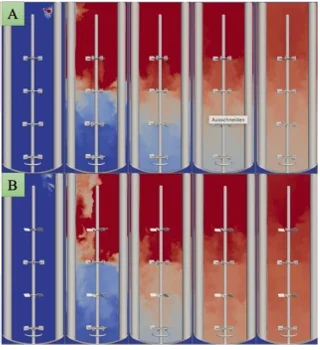
Alternating radial and axial impellers made the production fermenter mix faster on less power. The new setup was evaluated in experiments and with CFD (computational fluid dynamics).
Giving cells in the stirred tank the same flow conditions as in the shake flask
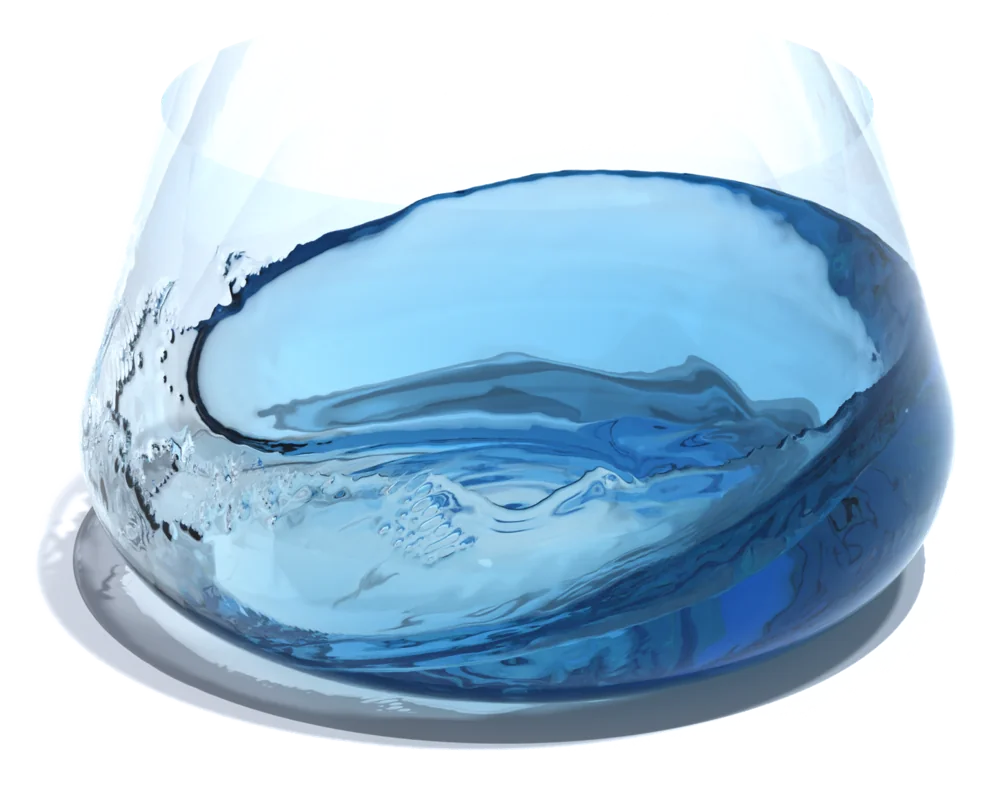
A validated free-surface CFD model calculates the flow conditions cells see in a shaken flask. From there we found the stirred-tank operating points that reproduce them, for NK cells and for three Streptomyces species.
Mechanistic models and process data for stable continuous operation
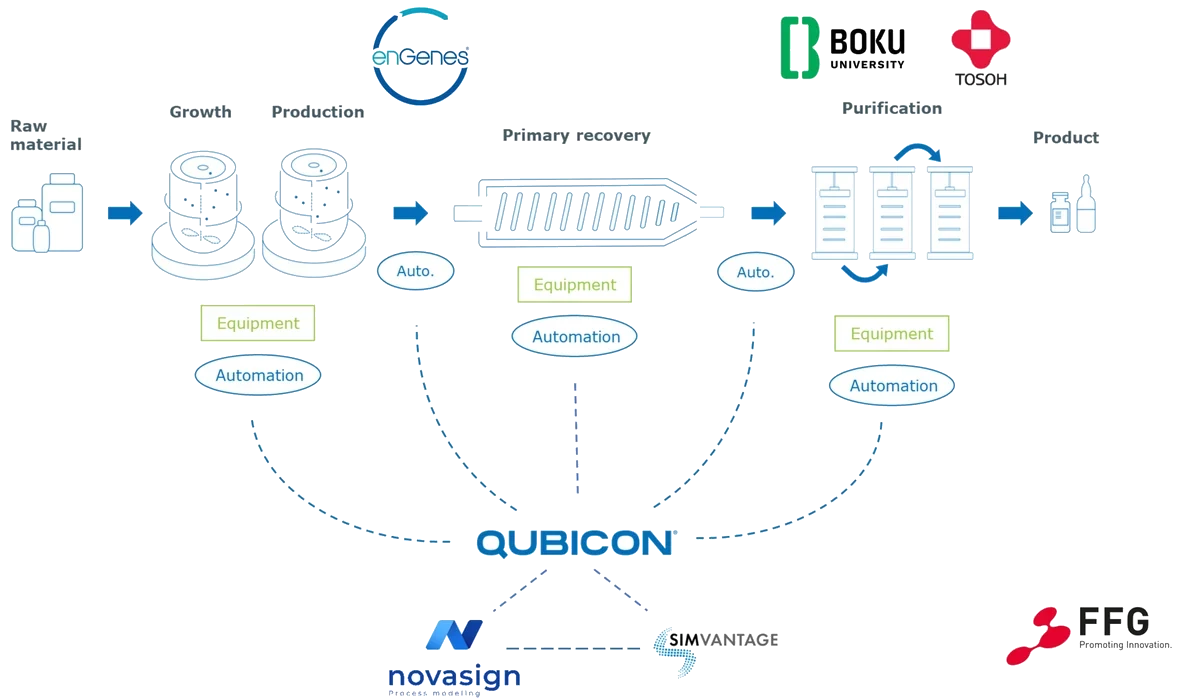
Six partners built a digital twin of a continuous E. coli process, from growth through purification. SimVantage added the CFD, so operators saw mixing and shear next to their process data.
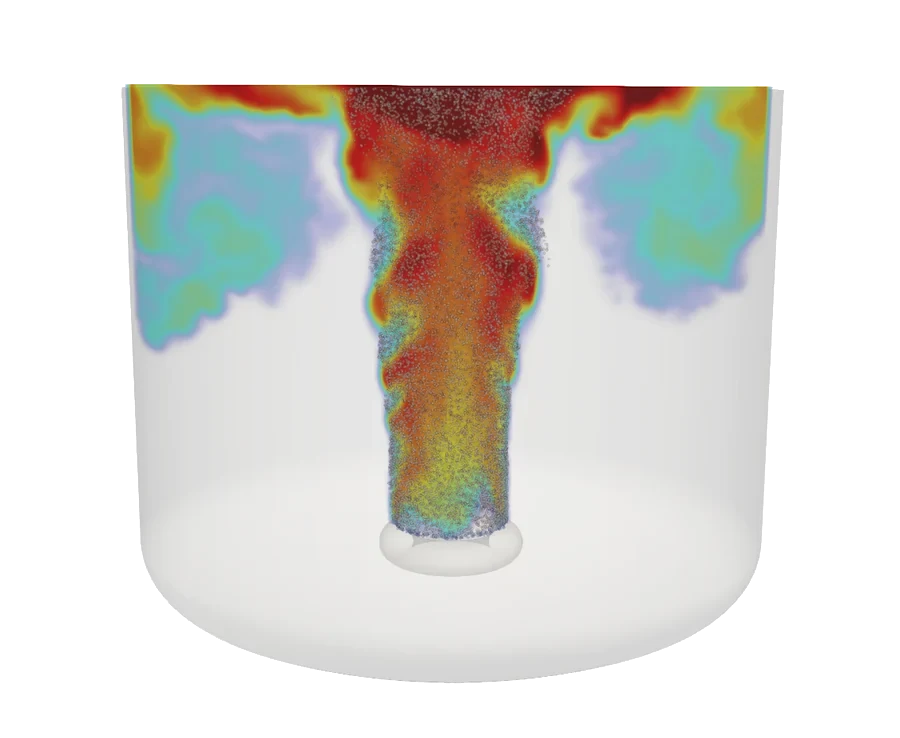
Mass transfer and mixing time in an aerated production vessel
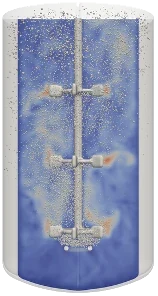
A CFD map of mixing time and kLa (oxygen transfer coefficient) showed what limits the process at each operating point. The customer could then raise oxygen transfer where it was short and skip extra agitation where mixing was already good enough.
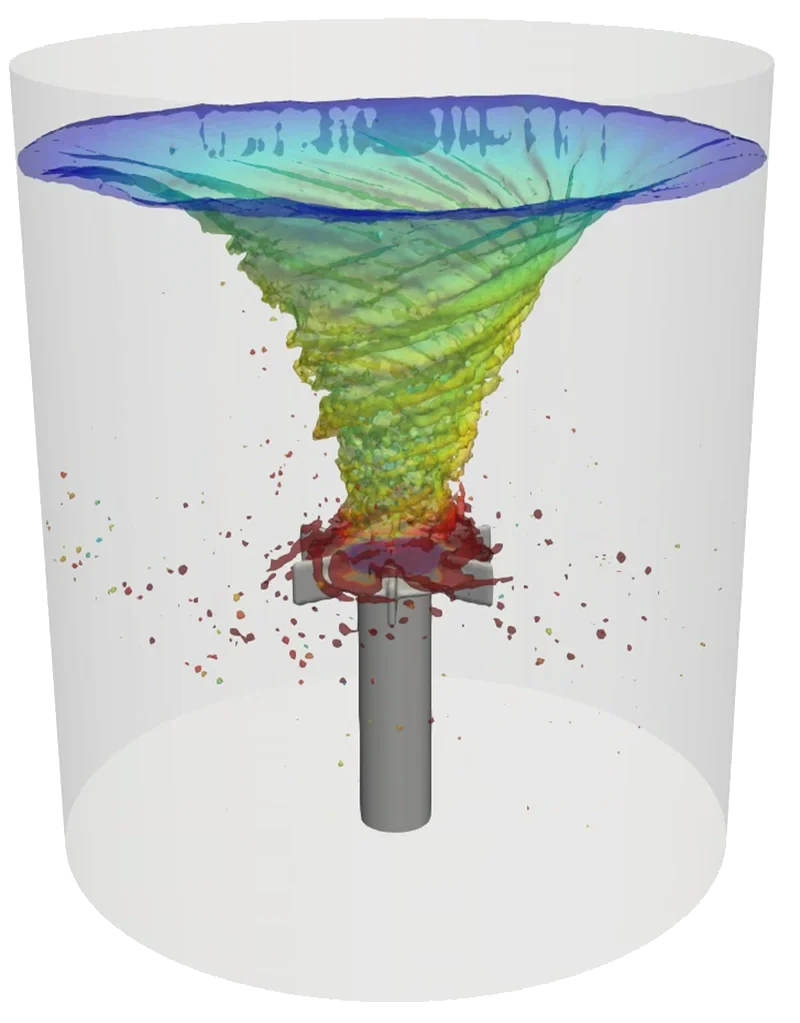
Vortex formation in a stirred tank, measured and predicted
Vortex depth, width and volume were measured in a Rushton turbine tank with five baffle configurations and compared with a GPU lattice-Boltzmann free-surface model that needs no fitting factors. A new swirl-number correlation predicts vortex depth for all five.
CFD-trained models for moving a process between scales
Neural networks trained on CFD results predict shear, oxygen transfer and mixing time in milliseconds, even where correlations fall short. That turns in-silico scale-up into a matter of minutes.